

PFORZHEIM FOR DESIGNLOVERS


Pforzheim – a city rich in history, nature and culture. Following its almost total destruction in the Second World War, a radical new beginning was ventured here, establishing the heritage of post-war modernism. Yet Pforzheim is not only rich in architecture, but also a melting pot for the creative industries. Numerous designers and artists live and work in the city, ensuring a dynamic scene. For good reason: exceptional shopping opportunities, a diverse range of culinary delights and charming natural surroundings ensure a high quality of life in Pforzheim.
Made in Pforzheim
In Pforzheim, there is a diverse community of creative minds who have not only gained local renown, but also find recognition beyond national borders. From talented jewellery designers to visionary sculptors and innovative fashion designers – they all shape the cultural life of the city. Their works are an expression of originality and innovation, set new standards and represent a major asset to the city with their creative and economic potential.
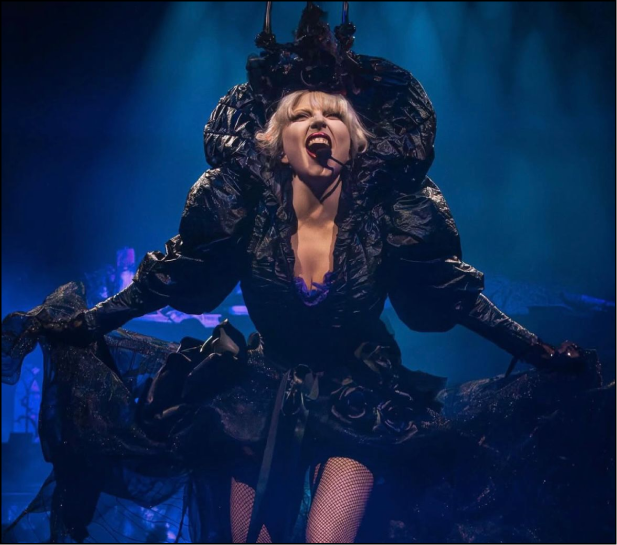
Lady Gaga, Beyoncé, Doja Cat and Björk – they are all clients of Pforzheim fashion designer Rebar Aziz. Following his graduation from Pforzheim University in 2020, Aziz remained in his studio at the EMMA Creative Centre, where he has since been developing individual concepts and unique collections. Through his work, Aziz contributes to the visibility of contemporary fashion from Pforzheim on an international level.
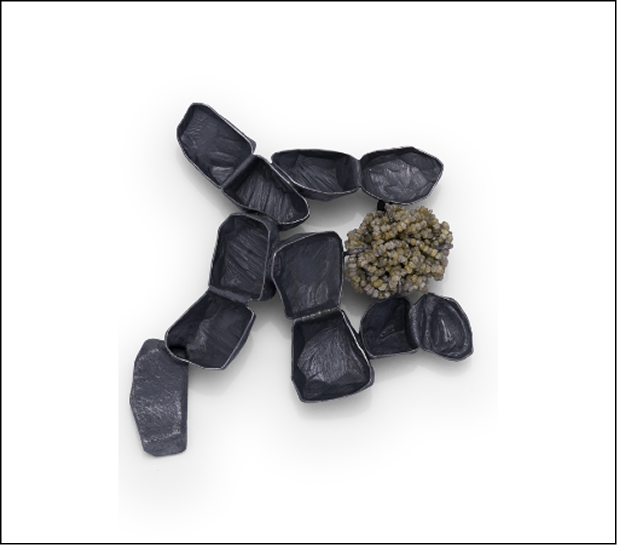
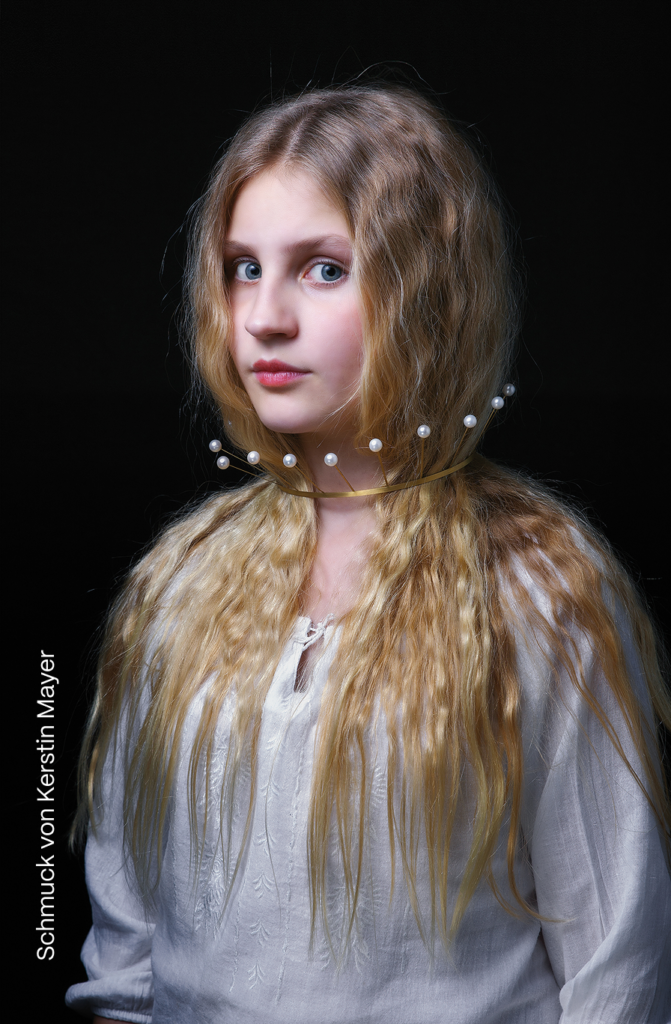
With Iris Bodemer, technique follows the idea: only once the Pforzheim-based artist has clearly defined what she wants to show and express does she realise her pieces of jewellery using a suitable material and the corresponding technique. In doing so, she does not rule out the possibility of material-related and technical coincidences occurring. Bodemer’s works can be seen in numerous public collections, such as the Pforzheim Jewellery Museum, CODA Apeldoorn (Netherlands) and the Marzee Collection. Furthermore, Iris Bodemer has received renowned awards, such as the Marzee Prize and the Herbert Hofmann Prize.
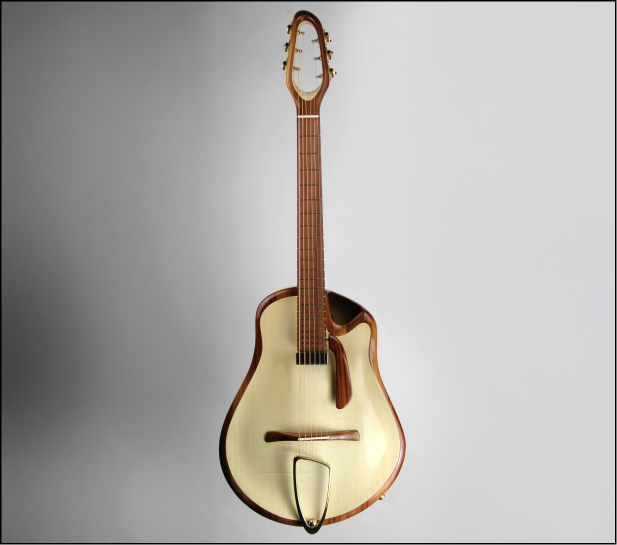
Music meets hemp: Pforzheim designer Jakob Frank uses Hempstone for his acoustic guitars – a material made from hemp fibres and water that has a similar hardness to wood and requires no synthetic binders. Frank developed the first prototype during his bachelor's thesis in industrial design at Pforzheim University. It took over three years before the first hemp guitars could be produced in series. Various guitar models, as well as basses and ukuleles in different designs, are now created in his workshop in Pforzheim. Frank has already been awarded the 2020 Young Craftspeople Promotion Prize for his instruments, all of which are one-offs.
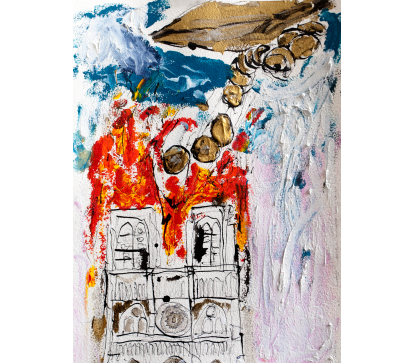
In his works, Janusz Czech deliberately seeks to engage with social and political issues. Czech studied painting, printmaking, and conceptual art at the Academy of Fine Arts in Karlsruhe as well as at the Academy of Fine Arts in Vienna, graduating in 2014 as a master student (Meisterschüler). He is a member of the editorial board of the philosophical business magazine agora42 and, since 2019, has been Artistic Director of the municipal art space A.K.T in Pforzheim, as well as Curator of the Pforzheim Art Association since 2025. In 2021, he received a scholarship from the Cité Internationale des Arts in Paris and a work grant from the Stiftung Kunstfonds. His installation „Anarchy-Tecture“ was acquired in 2021 by the contemporary art collection of the Federal Republic of Germany.
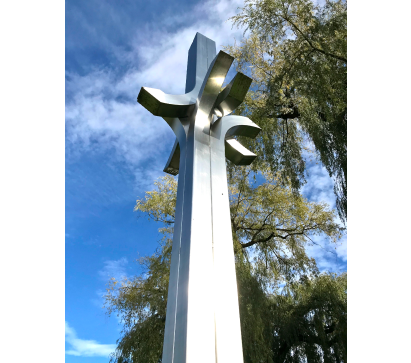
Hardly any other artist shapes Pforzheim's cityscape as much as René Dantes: works by the sculptor, who was born in Pforzheim, can be seen in numerous public squares throughout the Gold City. The starting point for his sculptures made of stainless steel, weathering steel or stone is an intensive observation of humanity and nature. One of his best-known works is the Bertha Benz monument near Waisenhausplatz – a tribute to the famous Pforzheimer. His five sculptures from the „Urban Nature“ series on Kaiser-Friedrich-Straße also have their home in Pforzheim. This sculpture mile was recognised as an example of successful urban district development in Europe as part of the European competition „URBACT – Good Practice Call“. Dantes, who studied painting and sculpture in Vienna and Paris, has been showing his work in national and international solo and group exhibitions since 1987, including in New York, Beijing, Paris, Antwerp and Berlin.
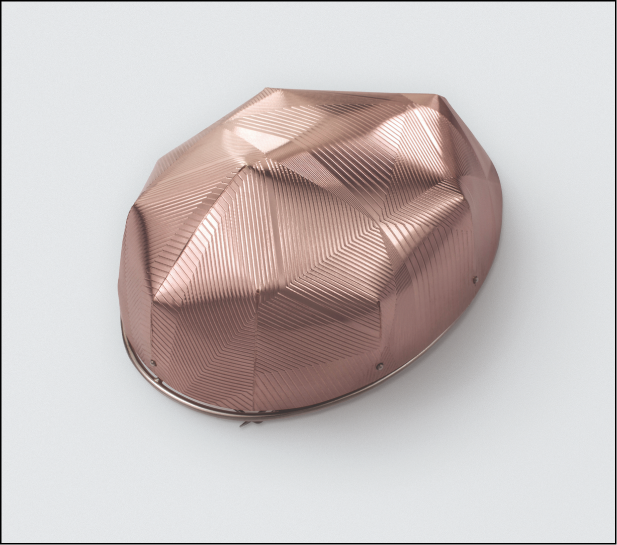
Frieda Dörfer, a trained goldsmith and graduate of both the Goldschmiedeschule and Pforzheim University, creates brooches, necklaces and rings in her Pforzheim studio, all of which are characterised by the precise technique of guilloché. Even during her studies, Dörfer specialised in this semi-mechanical engraving technique, which was particularly used in 19th-century artisanal jewellery production. Her works are part of the collections at the Pforzheim Jewellery Museum and the Badisches Landesmuseum in Karlsruhe. They have been shown at Galerie Ra in Amsterdam and the Taipei Gold Museum in Taiwan, among others, and have been part of numerous exhibitions such as the Mari Funaki Contemporary Jewellery in Melbourne (Australia) and the German Contemporary Jewelry Exhibition in Hangzhou (China). In 2019, she received the Sponsorship Award for Young Crafts from the Ministry of Economic Affairs, Labour and Housing and the Association for the Promotion of Crafts in Baden-Württemberg.
Places to be
At Pforzheim's creative hubs, a vibrancy unfolds that makes the city a pulsing place for art and culture. Here, creative professionals find the space to realise their innovative ideas away from the mainstream. By utilising vacant areas and spaces, art galleries, design studios and creative hotspots are emerging that attract a wide audience. In addition, Pforzheim acts as host to numerous design and art events that bring the city attention beyond its borders.
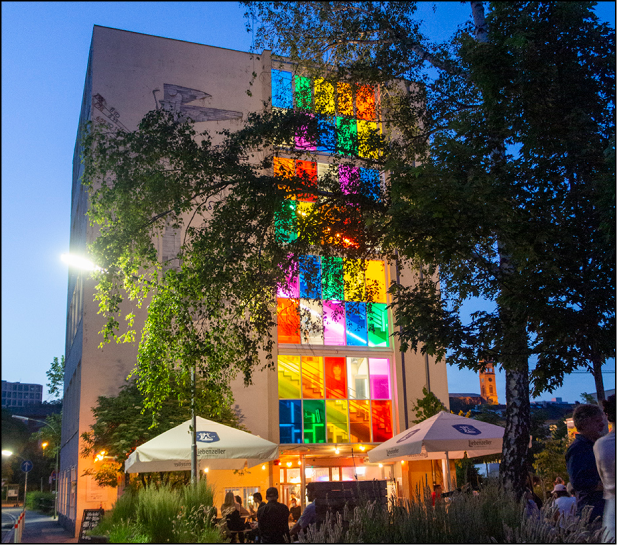
Strikingly, it blends into the appearance of the Quartier an der Enz in Pforzheim: the stair tower of the former Alfons-Kern School, which was preserved during the demolition of the school in 2010 thanks to the listed sundial on the south side. The Alfons-Kern Tower – today known primarily under the label A.K.T; – is a venue for social discourse and an interdisciplinary laboratory for the future. Here, current issues and the social relevance of art and design are made visible. Exhibitions by contemporary national and international artists and designers regularly take place on two floors at the A.K.T;. Guided tours and workshops are also offered. On the upper floor, students of the Master’s degree programme in Design & Future Making at Pforzheim University explore future issues in the MADLAB, while the ground floor is home to Café Roland.
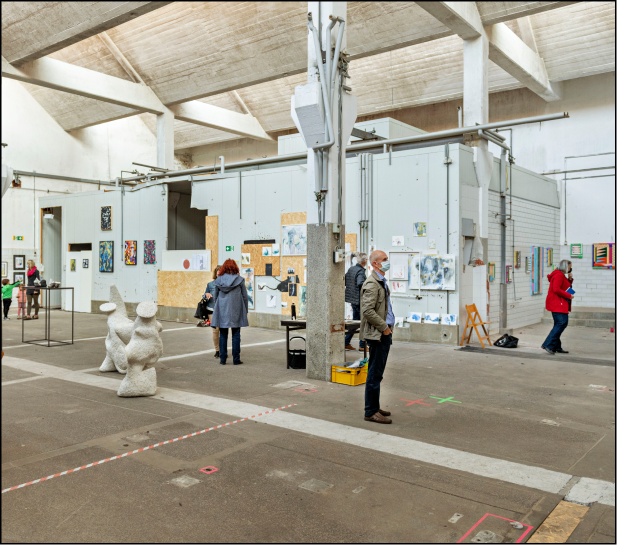
Under the slogan „Living, Working, Art and Culture“, a small, vibrant district has developed on the site, within the spacious halls and the rooms of the former Pforzheim slaughterhouse. Alongside living and working spaces, there are also venues for events and culture here. The artists regularly open their studios, and art markets, theatre performances, readings and musical events take place.
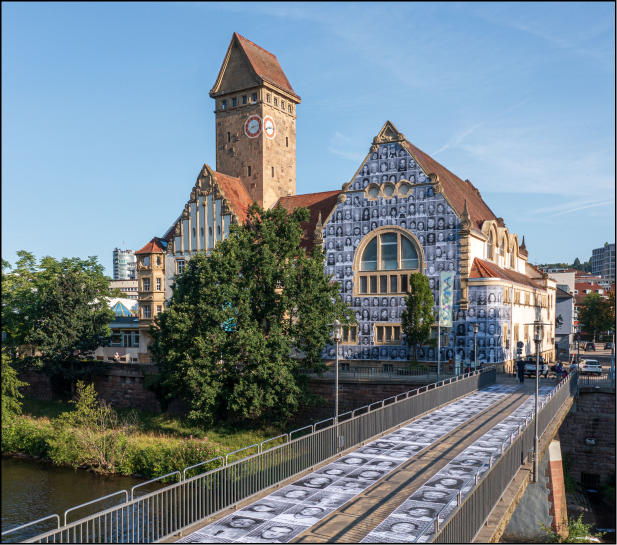
For the creative industries from Pforzheim and the region, the EMMA – Creative Centre Pforzheim is the central point of contact. Spread over 3,000 square metres in the building of the former Emma Jaeger Bath, the facility houses offices, studios and coworking spaces as well as fully equipped workshops for fashion, accessory, jewellery and industrial design. These also include historic machines for artisanal jewellery production, where traditional craft knowledge is practised and passed on. Furthermore, the listed Art Nouveau building is home to the team from the City of Pforzheim's Creative Industries department, which offers workshops, seminars, coaching sessions and fellowship programmes such as „Designers in Residence“ to provide support and networking opportunities. Through events such as the „Schöne Bescherung“ design market and the neighbourhood festival, EMMA engages in dialogue with urban society and enhances Pforzheim's reputation as a design hub.
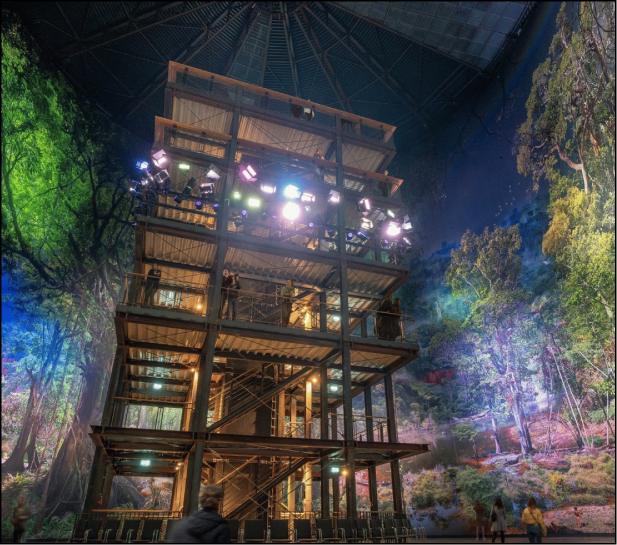
The Gasometer Pforzheim is now known far beyond the borders of the Gold City, as the 360-degree panoramas by Berlin artist Yadegar Asisi delight visitors from near and far. Following „Rome 312“ (2014-2018), „Great Barrier Reef“ (2018-2023) and „Pergamon“ (2023-2024), „Amazonia“ now leads visitors into the depths of the Brazilian rainforest, with its fascinating flora and fauna. The immersive experience is supported by an impressive light installation with day and night simulation, a realistic soundscape and specially composed music by Eric Babak. Snacks, cake and drinks are available in the adjoining bistro. In addition, the listed industrial building also serves as a venue for events and concerts.
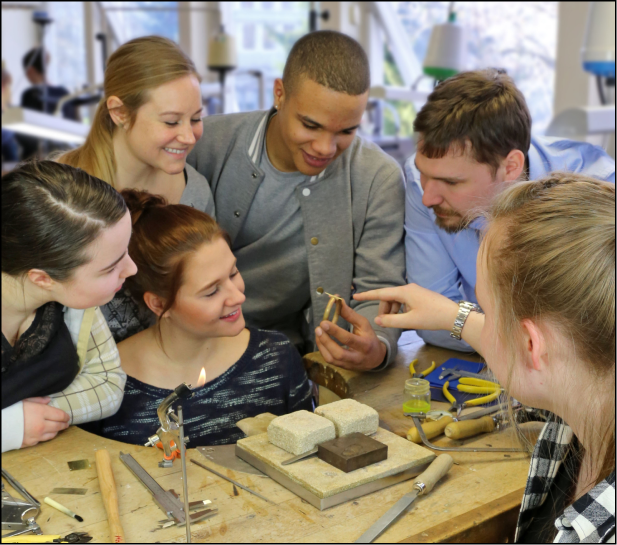
The Goldschmiedeschule Pforzheim, with its long history dating back to 1768, enjoys international recognition. Since the 1960s, its focus has been on teaching craft techniques as well as design and styling. Today, the school offers a wide range of vocational training programmes, dual study courses and master craftsman qualifications in the fields of goldsmithing, watchmaking, design and electroplating.
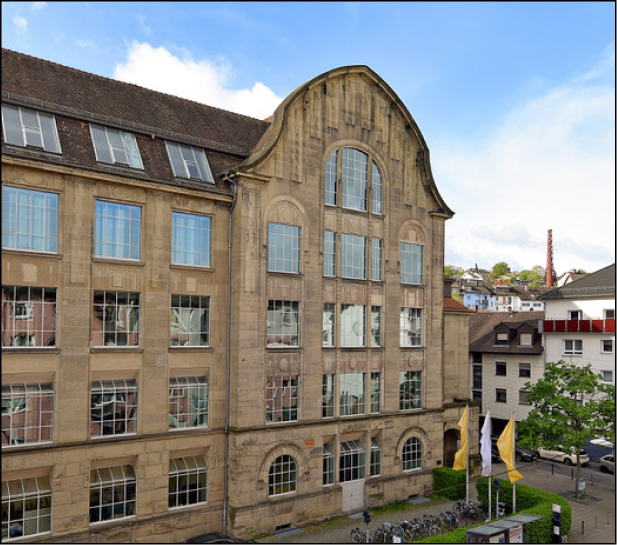
With its predecessor institutions, the Faculty of Design at Pforzheim University has existed since 1877. This makes it one of the oldest, most traditional and most renowned higher education institutions for the discipline of design in the German-speaking world. Around 600 aspiring designers from all over the world study here. The faculty offers six Bachelor's and four Master's degree programmes: Accessory Design, Fashion, Industrial Design, Jewellery, Transportation Design and Visual Communication. The Master's programmes in Transportation Design, Jewellery, Creative Direction and Design & Future Making deepen design expertise. In the historic building at Holzgartenstraße 36, students have access to first-class workshops, media labs and studios for the realisation of their projects. At the end of the semester, the prospective designers present their work and projects in a degree show.

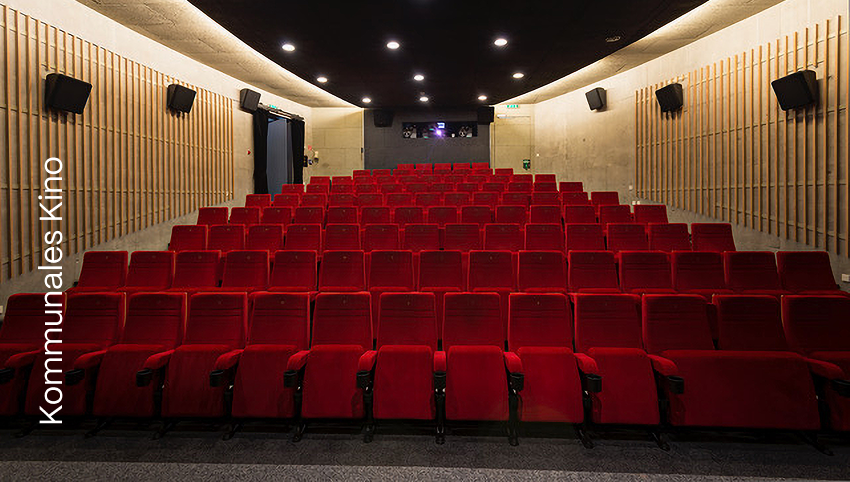
Venue with free courses and spaces for creative events such as concerts, poetry slams, theatrical performances and more
Special Events
Pforzheim is a bustling venue with a varied programme for locals and visitors alike. From exhibitions to music festivals, the city offers a wide range of events. The Pforzheim scene is enriched by art openings and design markets. Music lovers can look forward to concerts spanning various genres, from classical music to jazz and rock. Furthermore, festivals and markets attract visitors from near and far.
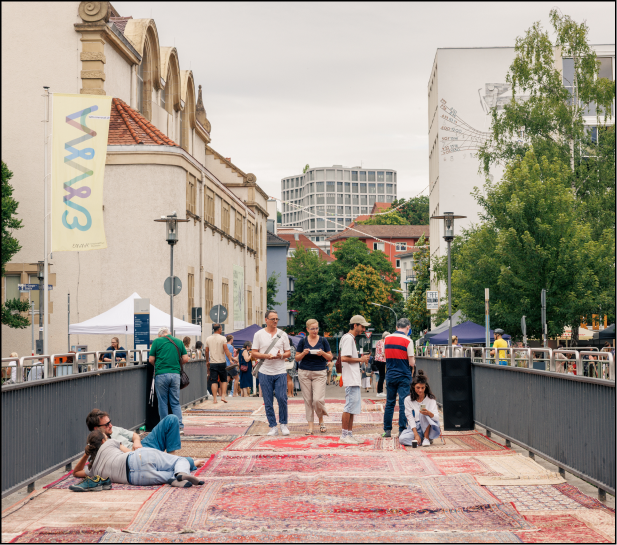
In July | A vibrant neighbourhood hub for students, creative professionals and local residents has emerged between the EMMA Creative Centre, A.K.T., and the Faculty of Design at Pforzheim University. At the annual summer event "Alfons & Emma: Neighbourhood Festival on the Enz", visitors can explore the neighbourhood through exhibitions, workshops, talks, food and music, and get a glimpse behind the scenes of the creative professionals’ work.
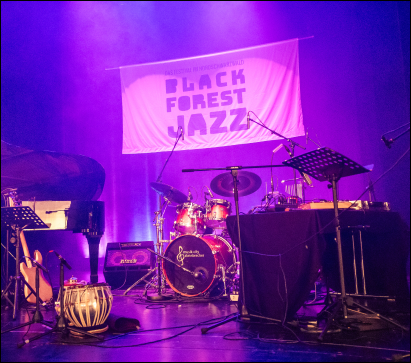
In September/October | BlackForestJazz is a top-class jazz festival directed by the internationally renowned and multi-award-winning (OPUS and ECHO) musician, Sebastian Studnitzky. The festival is a showcase for new styles in international jazz and brings not only young musicians but also major national and international artists to Pforzheim and the Northern Black Forest region.
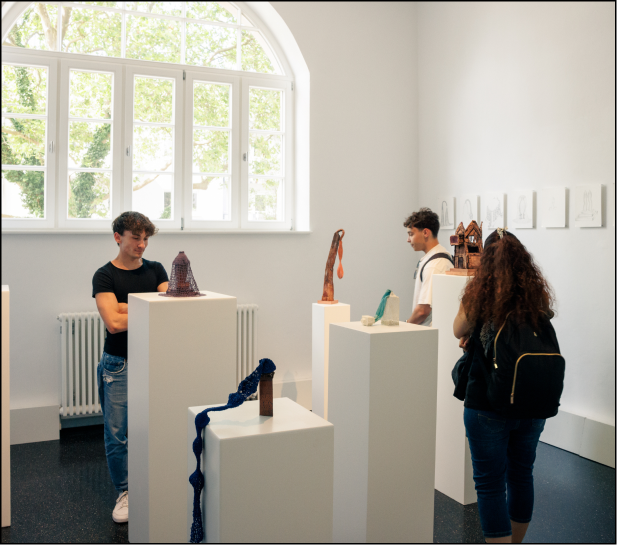
From April to June | Every year, the city, in collaboration with the university and the Design Centre Baden-Württemberg, invites young international designers to apply to join the „Designers in Residence“ scholarship programme. A jury selects three talented individuals who are given the opportunity to work at fully equipped workstations at the EMMA Creative Centre from April to June, whilst also receiving accommodation and financial support. The results are subsequently presented in an exhibition.
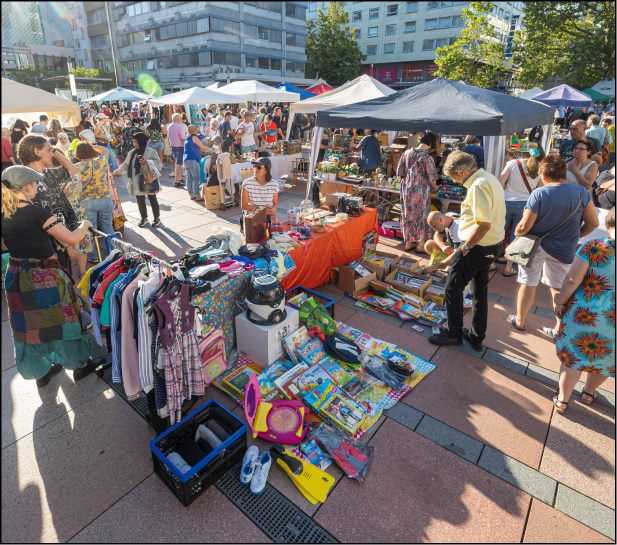
In July | Every year, the Gruschtelmarkt attracts thousands of visitors to Pforzheim city centre; the traditional market in the pedestrian zone and on the market square is also extremely popular amongst stallholders. On a selected weekend in summer, flea market enthusiasts can browse and haggle here. Whether it’s textiles, household goods, books or antiques – there’s something to suit every taste. There’s even a children’s flea market for our younger visitors.
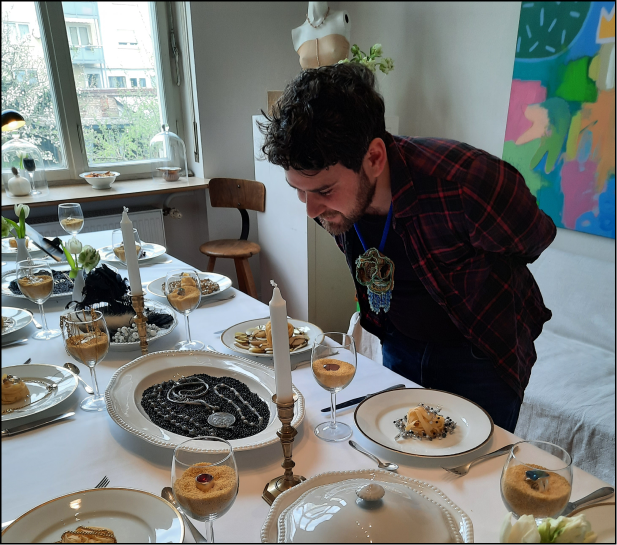
In October/November | Showcasing art, jewellery and design: this event regularly offers visitors fascinating insights into the work of professional creatives from Pforzheim and the Northern Black Forest cultural region. Alongside fine art, jewellery, design and other creative works are also on display. Private studios, temporary exhibition spaces and public venues open their doors and invite visitors to explore.
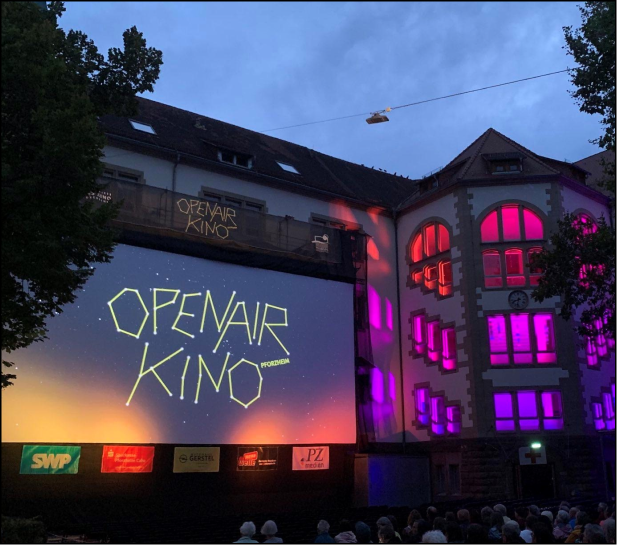
In August/September | During the summer holidays, the open-air cinema offers unforgettable film evenings under the open sky. Every year, the team at the Kommunales Kino puts together a varied programme featuring previews, new releases and classic films. In the courtyard of the Kulturhaus Osterfeld, there is space for over 1,000 visitors in front of a huge screen. In the event of rain, the Kulturhaus’s main hall serves as a dry alternative for cinema-goers.

Architectural Highlights
Pforzheim’s cityscape is characterised by the architecture of the 1950s and 1960s, the cultural legacy of the post-war period with its uncompromising modernism. In February 1945, the city centre was almost completely destroyed by an air raid. After the war – unlike in most other German cities – the decision was taken not to rebuild, but to make a radical fresh start. Renowned architects set new standards with their visions of light and airiness, which are still admired today.
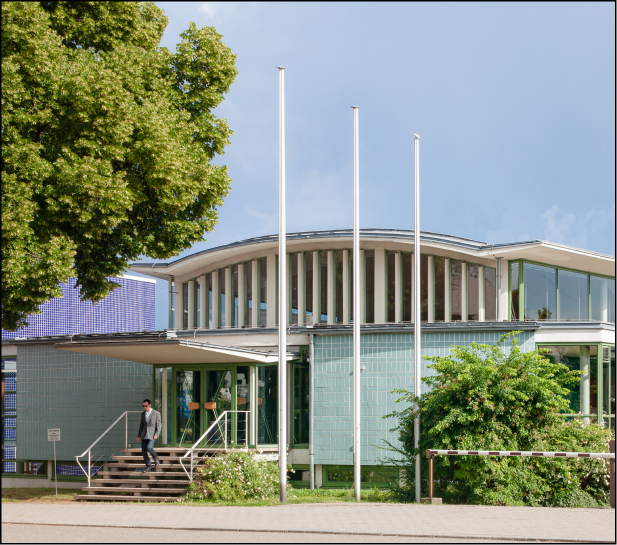
The Pforzheim Magistrates’ Court is an outstanding example of 1950s architecture. It was built between 1956 and 1958 to designs by the architect Heinrich Gremmelspacher and is situated in the immediate vicinity of the main railway station. The building, which is now a listed building, is notable for its shell-shaped roof, its double-hipped office layout and its simple yet robust interior design. The glazed stairwells convey a sense of lightness and transparency, reflecting the spirit of democratisation. The large conference hall features an impressive wood-inlaid mural designed by Willi Müller-Hufschmid. As envisaged in the original design, the existing administrative building and the adjoining hall were extended in 2008 by a new building standing perpendicular to the slope; this is clad in dark blue tiles and accessed via a glazed walkway.
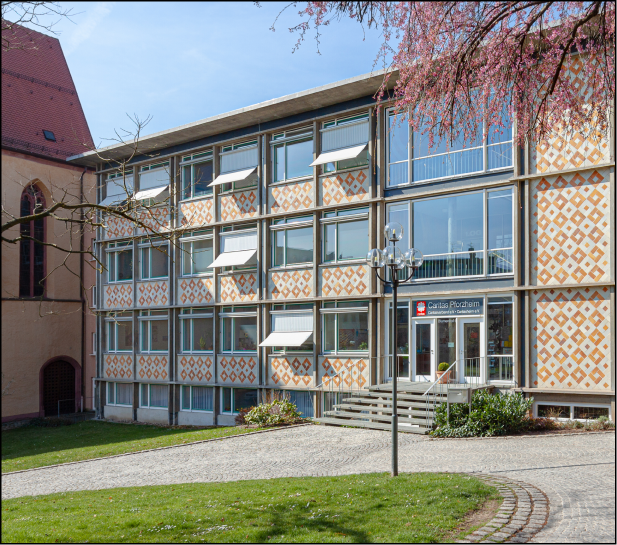
The former Pforzheim Public Health Authority building is situated on the Blumenhof, a spacious green space in the city centre, between the Three Rivers Fountain and the Orphanage Fountain, and adjoins the Barfüßerkirche. Built in 1955 to replace a convalescent home from 1824–1826 that had been destroyed during the war, the new building – which today houses the Caritas welfare organisation – takes the form of a pavilion-like structure designed by the architect Heinrich Gremmelspacher. The supporting structure is exposed and features large windows with decorative infill panels, composed of light-coloured and ochre-yellow bricks laid in a diamond-patterned decorative bond. The entrance area is fully glazed and has an adjoining staircase. In the upper stairwell, visitors are greeted by a two-storey mural, created in 1955 by Bernhard Karl Becker, depicting a sun symbol in delicate pastel shades.
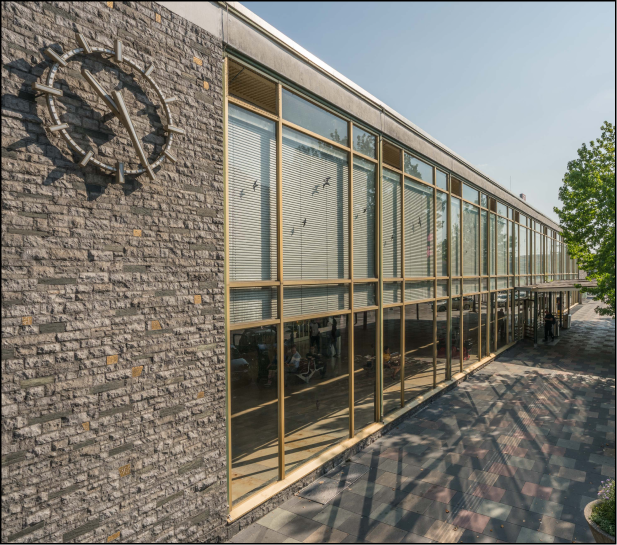
It is regarded as an architectural gem of post-war modernism: Opened in 1958 and designed by the renowned architect Helmuth Conradi, Pforzheim Central Station has been a listed building since 1989 – and is a fine example of the fusion of tradition and modernity. The station’s most striking feature is its imposing concourse: it opens out onto the forecourt via a large glass façade. A delicate canopy made of gold-anodised aluminium panels accentuates the entrance and pays homage to the historical significance of the watch and jewellery industry for Pforzheim. Inside the hall, strips of lighting along the long wall provide subtle indirect lighting, whilst elegant granite wall surfaces frame the space. Another highlight inside is the large wall relief by Josef Karl Huber, which abstractly explores the theme of „Goldstadt an der Schwarzwaldpforte“ (the ‘City of Gold at the Gateway to the Black Forest’).
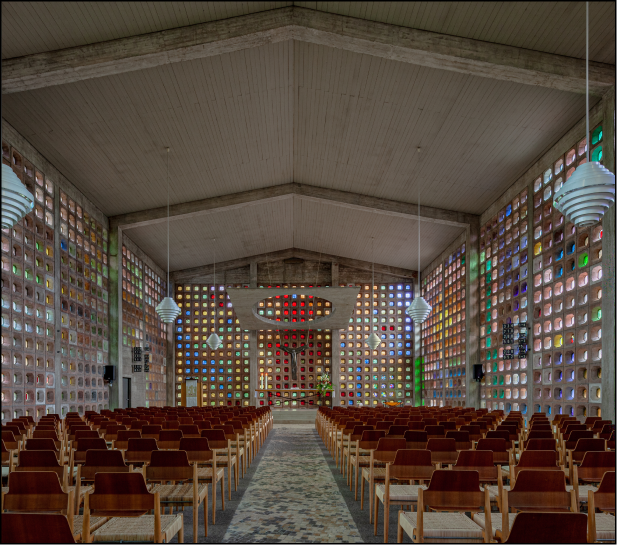
Had the architect Egon Eiermann not had the courage to try out a groundbreaking innovation, the appearance of the Matthäuskirche in Pforzheim would certainly have been different. We are referring to ‘Dickglas’, a cast-glass technique that produces unique reflections of light and colour. During the construction of St Matthew’s Church, thick-glass panes were set into square concrete blocks, which in turn were made from the rubble of Pforzheim, which had been almost completely destroyed in February 1945. With the exception of the glazing and the angel sculpture on the outer wall, Eiermann designed the entire church, right down to the pews, lamps and the principal features: the pulpit, altar and baptismal font. The result is not only a unique space for worship, but also a place that attracts architecture enthusiasts from all over the world – and has served as a model for many post-war church buildings, including the Gedächtniskirche in Berlin.
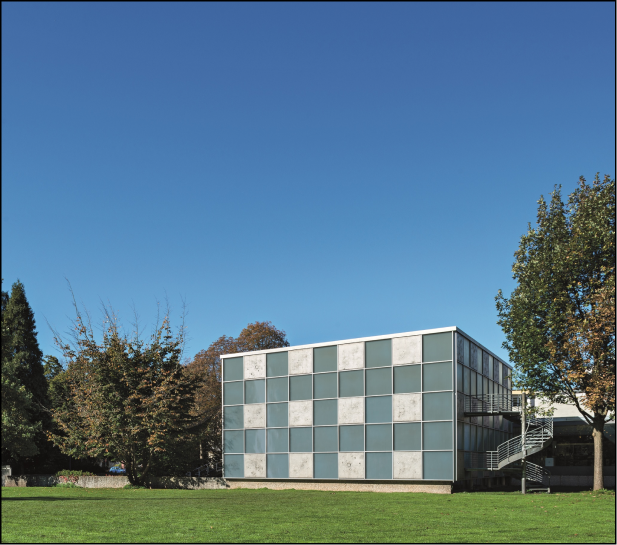
The Reuchlinhaus, home to the Jewellery Museum and the Art Society, is an outstanding example of post-war modernist architecture. It was built in 1961 to designs by Manfred Lehmbruck and is characterised by the „International Style“, inspired by the architecture of Ludwig Mies van der Rohe. Originally, the building was planned as a cultural centre and also housed the town archives, the local history museum, a library and the art association. The architect therefore designed each section of the building with the contents to be displayed in mind: He clad the local history museum building with sandstone from the Black Forest; the exterior of the jewellery museum was formed from aluminium and glass; the art society’s exhibition hall was given a steel-and-glass structure; and the municipal library is a glazed concrete building. The entrance hall remains the centrepiece: from here, there is a superb view of the surrounding city gardens.

Shopping
Pforzheim offers a delightful shopping scene with high-quality specialist shops. These can be found along the newly redesigned pedestrianised area, at Leopoldplatz on Bahnhofstraße or at Sedanplatz. Dillsteiner Straße is also particularly charming, with many retailers having set up shop there. The shopping experience is further enhanced by weekly markets along the River Enz or in the historic Nordstadt district, with its buildings dating from the Wilhelminian era.
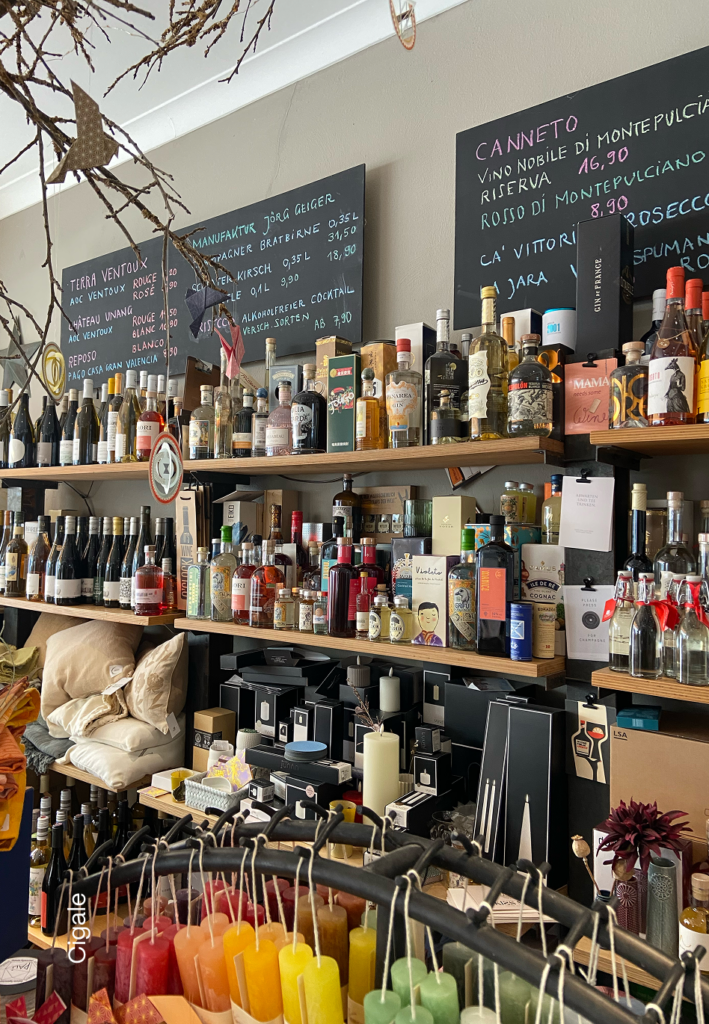
Flower and plant shop with its own nursery
Exquisite organic food and natural products
Designer fashion for women
Food, delicatessen, antipasti and flowers in the town centre
Food & Drinks
With more than 140 nations represented, Pforzheim offers a culinary journey around the world. As well as home-style cooking, the city’s restaurants offer a wide range of international specialities: from Japanese sushi creations and Thai summer rolls to Indian curries and Venezuelan arepas – there is a wealth of flavours and tastes to be found here. What’s more, bars, jazz clubs and cafés invite you to enjoy delicious cocktails, live music and a relaxing time on the banks of the River Enz.

Turkish restaurant serving breakfast, grilled dishes and delicious desserts
Currywurst with varying levels of spiciness, also available in a vegetarian version
German cuisine in a traditional setting
German cuisine and a beer garden at the gateway to the Black Forest
A changing menu in a cosy setting
Turkish bakery and breakfast in the town centre
Be Creative
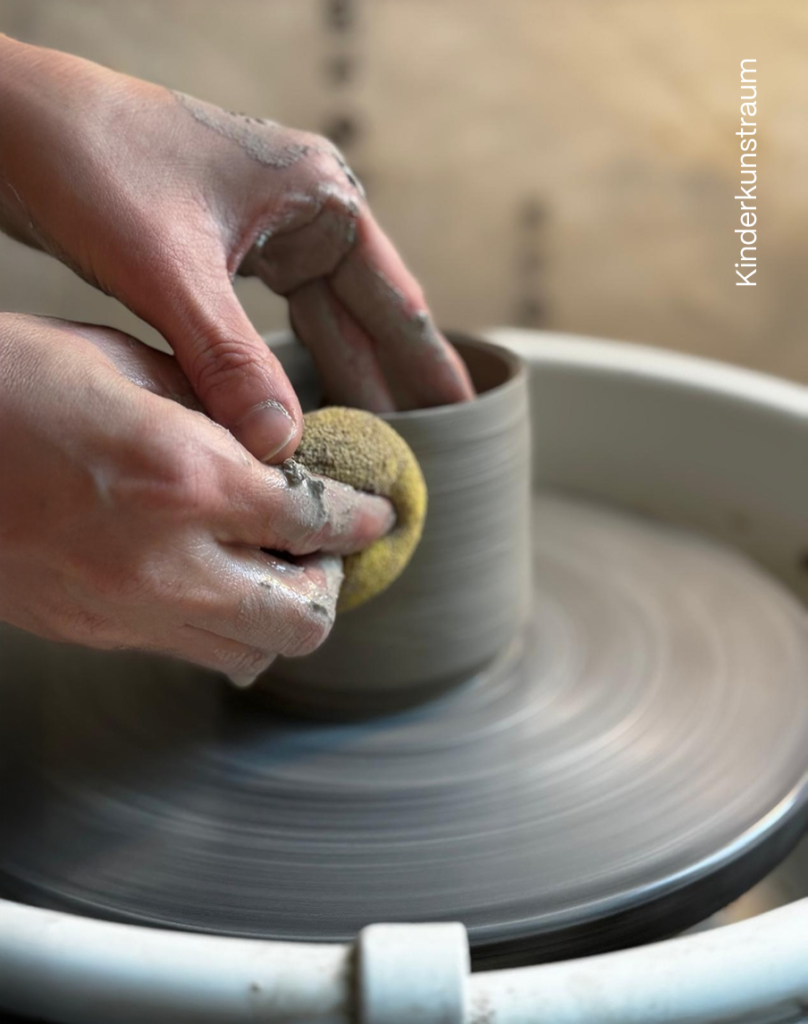
For anyone who wants to get creative, Pforzheim offers plenty of opportunities to discover their own creative potential. Both children and adults will find suitable activities here – whether it’s jewellery design, pottery or painting. Whether it’s dance and movement, practical drawing techniques or workshops on traditional jewellery-making: the activities on offer range from open drop-in sessions and personalised jewellery-making courses to creative events such as poetry slams, cosplay or street art, inviting you to try something new and bring your own ideas to life.
Countryside
With 83.5 per cent of its area comprising green space, Pforzheim is one of Germany’s greenest major cities. From the city’s parks to the restored riverbanks of the Enz, Nagold and Würm, the city offers numerous opportunities for recreation. Its charming location on the edge of the Black Forest also attracts visitors with its hiking trails and idyllic spa towns, perfect for relaxing day trips. The rich natural environment is not only a place of relaxation but also an important habitat for a wide variety of plants and animals.
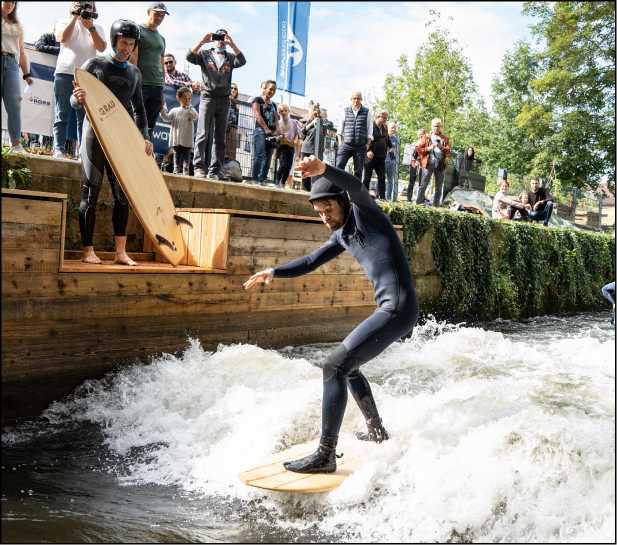
A taste of surfing right in the heart of Pforzheim: river surfing has been possible on the Metzelgraben since September 2021. Blackforestwave is situated right next to the Stadtgarten, not far from the unique Jewellery Museum, and is the first river wave of its kind. It is artificially generated underwater by a special structure and can be adjusted to different water levels. It draws its clear water from the Nagold, the Black Forest river. When the water level is suitable, the wave can be surfed both during the day and at night, as it is floodlit. The project was initiated by the blackforestwave association, which, with over 200 members, is committed to water sports activities that respect nature. Club members have exclusive access to the wave. However, non-members can also get out on the water during open-surf events and other activities, and afterwards enjoy the music and treats from the food trucks at selected events.
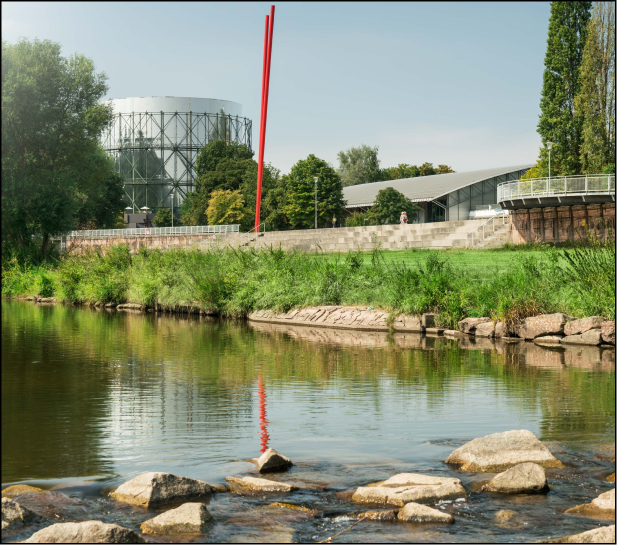
Ever since the 1992 State Garden Show, Enzauenpark has been a magnet for visitors. It is not just the beer garden that attracts guests, but also the wide range of leisure activities on offer – including a water playground, a play and exercise trail, and a play park. For those who enjoy sport, there is a basketball court. Those who wish can explore the walking trails or relax by the water. In summer, concerts, festivals and the Festival of Lights provide further attractions.
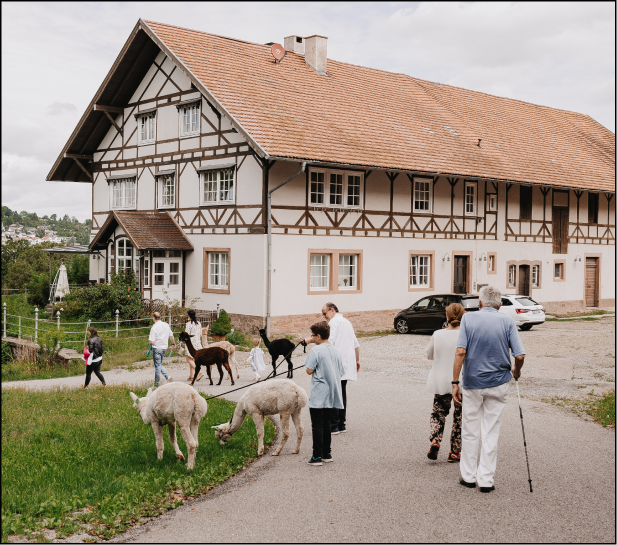
The listed Buckenberg estate offers magnificent views of the town and the Black Forest, as well as ancient Roman paths that are perfect for walking. The farmland surrounding the estate is farmed biodynamically and is Demeter-certified. The alpaca walks are a special experience, during which you lead the calm animals through the neighbouring woodland and along fields and orchard meadows.
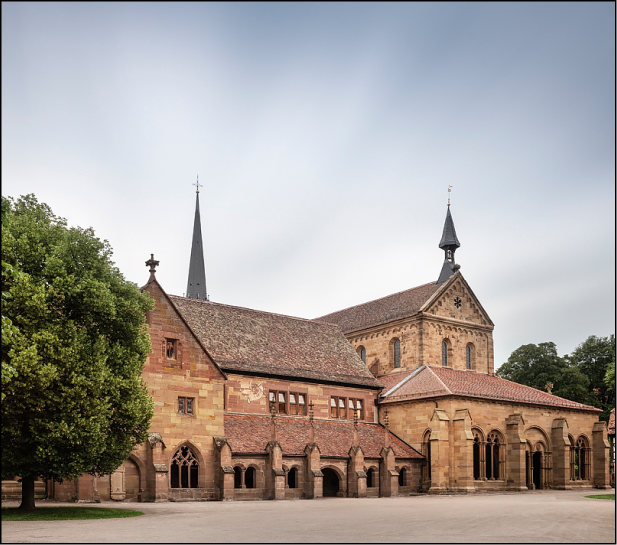
Maulbronn, situated 18 kilometres north of Pforzheim, is home to the best-preserved medieval monastic complex north of the Alps. The Cistercians began construction in the mid-12th century – the result was a vast monastic town. The monastery has been a UNESCO World Heritage Site since 1993. There are several circular walking trails around the site, and concerts, markets and festivals are held there regularly.
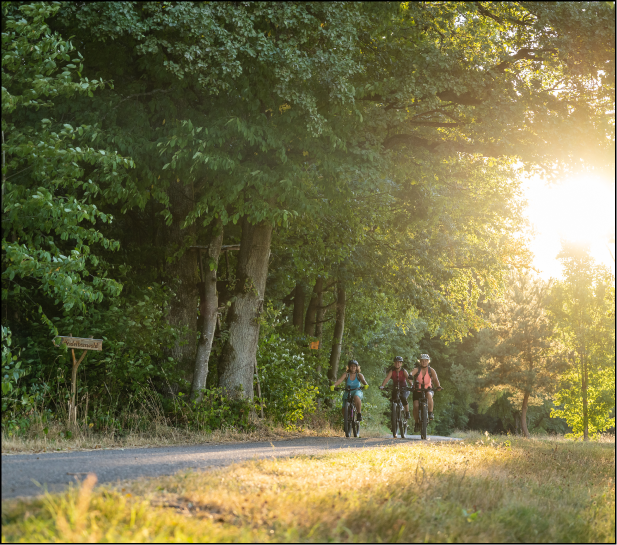
The long-distance cycle routes starting from Pforzheim are among the most beautiful in Germany. The Nagold Valley Cycle Route stands out amongst them: on this route, which is around 90 kilometres long, cyclists follow the Nagold as it winds its way through the Black Forest. The little river rises in Besenfeld-Urnagold before being dammed by the Nagold Valley Dam in Besenfeld-Erzgrube. It then continues through Altensteig, past trout ponds and a historic rafters’ inn, on to the town of Nagold. From the shepherds’ town of Wildberg, the route leads into the picturesque Seitzental valley and on to Teinach station, then into Calw, the town of Hermann Hesse. You can take your next break at the historic monastery grounds in Hirsau, before a stunning stretch takes you from Bad Liebenzell via Unterreichenbach to Pforzheim. The tour can also be completed in the opposite direction, though this requires a higher level of fitness.
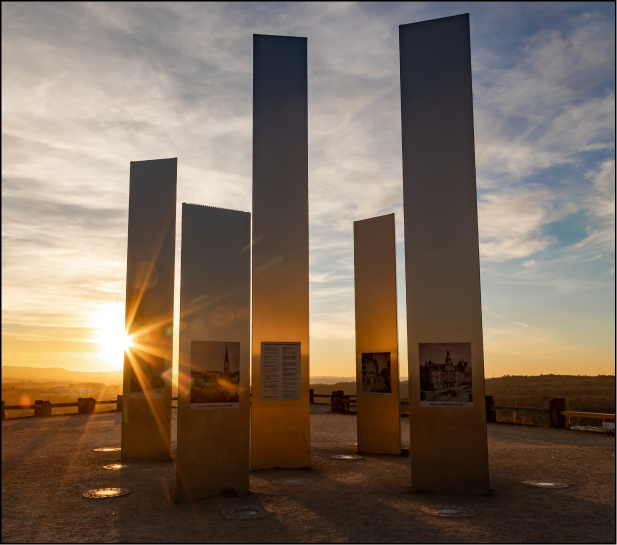
The Wallberg is a striking landmark of Pforzheim, visible from every part of the town. Originally a natural hill, it was filled in after the Second World War with 1,650,000 cubic metres of rubble – a fact that earned it the nickname „Monte Scherbelino“. Today, the Wallberg is not only a popular vantage point, but also a memorial with stelae on the platform that are visible from afar.
The five-kilometre circular walk winds its way through the historic rafting village of Dillweißenstein and along the River Nagold, past three medieval castle ruins that tell mystical tales
Here lies a little oasis in the heart of the city, offering views of 1950s architecture, always accompanied by the idyllic splashing of the Three Rivers Fountain
A taste of island life between Nagold and Enz: when the weather’s fine, young and old alike gather to play boules or enjoy the large children’s playground beneath the lime trees
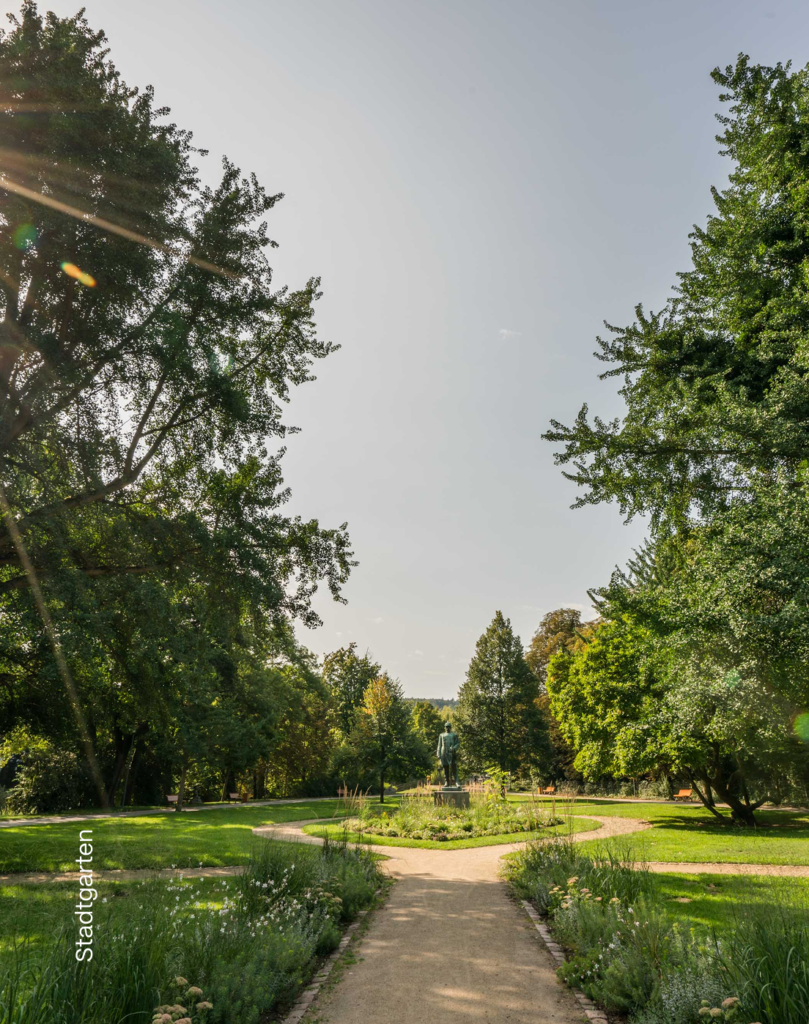
The Stadtgarten, the main park of the city, with its footpaths along the Nagold, majestic ginkgo trees and a large fountain, is the perfect place to unwind
This cycle and walking path winds its way through dense woodland and invites you to learn about rare tree species at the arboretum or cool off by the Pfatschbach stream
PF Design Map
The interactive map won’t load until you accept the cookies.
